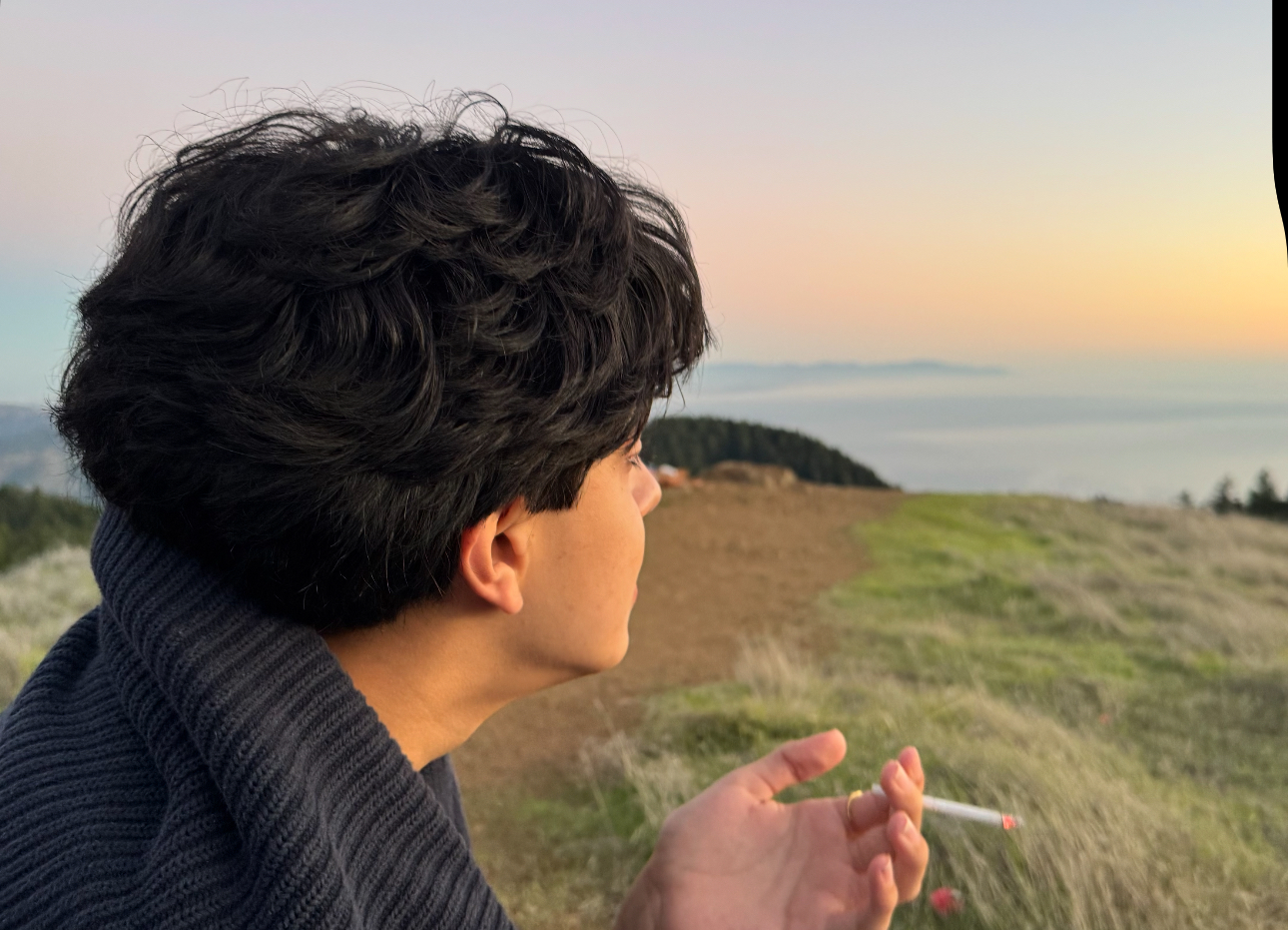
this past week in sociology, my professor asked us to write about how our lives have been shaped by social structures. you know yourself better than anyone, the prompt read, and yet i realized how much of myself has been molded by forces far beyond me.
i’ve always loved this class. it makes me feel alive. i find myself romanticizing durkheim’s data tables the way others might romanticize dinner dates. sociology, to me, is the art of realizing that our personal troubles are just public issues wearing custom-fit clothes.
growing up in a strict, conservative, and homophobic home, i learned early on how to perform. like goffman’s stage metaphor, i was the actor, my living room the set, and every gesture a rehearsed line. my habitus, as bourdieu would say, was shaped by silence, learning when to laugh at jokes that hurt, how to lower my voice, how to tuck my softness behind sarcasm. i watched my sisters twirl in the kind of freedom i wanted but couldn’t claim. i learned that being “the other,” as de beauvoir might remind us, isn’t just about gender. sometimes it’s about existing as a boy who can’t perform boyhood correctly.
there was a point, somewhere between algebra homework and whispered prayers, when i started to believe that fitting in was more important than existing. i didn’t have the words for it then, but what i was experiencing was altruistic suicide, durkheim’s idea of losing oneself in the collective. i tried so hard to belong that i nearly disappeared.
but life, like any good social experiment, changes its variables. when i transferred to a high school that celebrated difference, i found people like me, people who lived outside the iron cage. weber’s iron cage, his metaphor for how capitalism traps us in cycles of work and rationalization, made sense of everything i’d felt. it wasn’t just my parents’ expectations that confined me, it was a world that equated worth with productivity, masculinity with dominance, and love with permission.
at berkeley, i see the iron cage everywhere. in 8 a.m. lectures, in linkedin posts about five internships before graduation, in the unspoken panic that if we stop moving, we’ll stop mattering. we’re all caught in this bureaucratic ballet, performing excellence while secretly yearning for meaning.
marx would say i was alienated from myself, my labor, my identity, and he’d be right. but there’s also something liberating about naming the forces that try to name you. like mora’s making hispanics, which shows how institutions created “hispanic” as a category, i began to see how my identity, latino, gay, male, wasn’t just me, it was a negotiation between census boxes, media markets, and family histories.
i remember when i first learned about pan-ethnicity, how groups like mexicans, puerto ricans, and cubans became “hispanic.” it made me think of my own upbringing, how i was told to be latino but never too feminine, proud but never loud. identity, i realized, is both a mirror and a marketplace, something we’re sold as much as something we claim.
and somewhere between theory and therapy, i found myself fascinated by how every part of my life, from my first heartbreak to my college major, was linked to the social fabric. chambliss taught me that excellence is mundane, fourcade and healy that we live in an ordinal society ranked by invisible hierarchies, and du bois that the veil still exists, it just changes color. hoang’s spiderweb capitalism made me see that even intimacy can be an economy.
when i walk across campus now, i think of the up series, that lifelong documentary that asks who we become as society shapes us. at seven, we dream. at fourteen, we conform. at twenty, we question. and somewhere between those ages, i learned that my story wasn’t a deviation from boyhood, it was just a different syllabus.
maybe that’s what sociology really is, the art of realizing that every heartbreak, every silence, every sunday sermon was part of a larger system, and that by understanding it, you can finally breathe outside it.
boyhood wasn’t interrupted. it was redefined.
Leave a Reply